
How Bench Warrants Work in Franklin County
“Bench warrant” is a common way to describe court process after a required appearance or order is missed. Virginia statutes often use “warrant” or “capias,” so the exact label matters less than the court and case. In Franklin County, adult traffic and misdemeanor settings are usually at General District Court, felony indictment matters at Circuit, and juvenile, support, or family issues at J&DR.
Possible triggers include a willful failure to appear, contempt, violation of a release condition, or default on court-ordered fines or installments. Not every missed date leads to the same process. Ask the clerk what event occurred in the specific case and whether a judge must act before it can be changed.
Franklin County Bench Warrant Check Starts with the Date
For many adult traffic and misdemeanor matters, the Franklin GDC Clerk is the first call after a missed setting. The court publishes criminal and traffic dockets on Monday, Wednesday, and Thursday mornings and arraignments Monday through Friday. Those public schedules do not promise a warrant-recall window or a walk-in surrender time. Call 540-483-3060 and ask whether the missed date produced a warrant, capias, new date, or another court event.
At the courthouse, GDC is at 275 South Main Street, Suite 111. The county's court directory lists court roles, and the official GDC page provides clerk and schedule information. Court hours are not a promise that a judge will hear a recall request without prior arrangement.
The county's Magistrate page describes its separate public role.
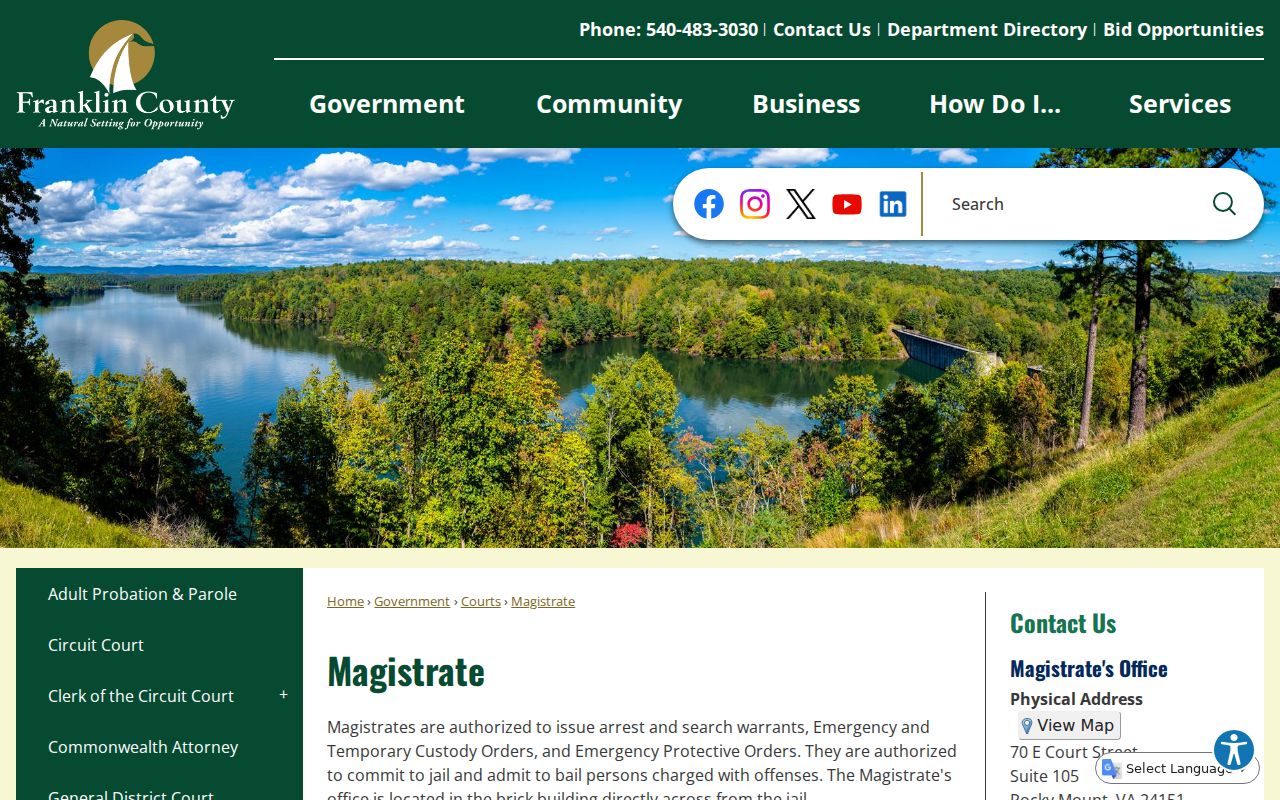
Magistrates handle probable-cause and initial-bail functions, while the case clerk owns the docket.
Bench Warrant Issuance in Franklin County
A judge or other authorized judicial officer decides what process follows a missed setting or order. Virginia Rule of Court 3A:4 permits a warrant after failure to appear on a summons. Section 19.2-128 addresses willful failure to appear and possible consequences. For a felony indictment, Circuit process may be a capias under §19.2-232; a fine or installment default can lead to a show-cause or capias path under §19.2-358.
The Sheriff's Office may execute process, but it does not replace the issuing court as the source for the docket or recall. The case continues unless the court takes a separate action on the charge or obligation.
Franklin County Bench Warrants and Traffic Infractions
Virginia law draws a distinction between a traffic infraction and a criminal traffic or misdemeanor case. Under §19.2-258.1, a court may hear a traffic infraction in the person's absence after a failure to enter an appearance, and the statute says a warrant shall not issue for that failure under §46.2-938. A separate missed order, criminal charge, release violation, or fine default can create a different question.
Read the charge classification on the court paper and ask GDC which rule applies. Do not assume that every missed traffic date produces the same process. If the case is juvenile or family-related, J&DR may be the correct court instead of adult GDC.
The official Franklin J&DR page explains the separate court schedule and office.
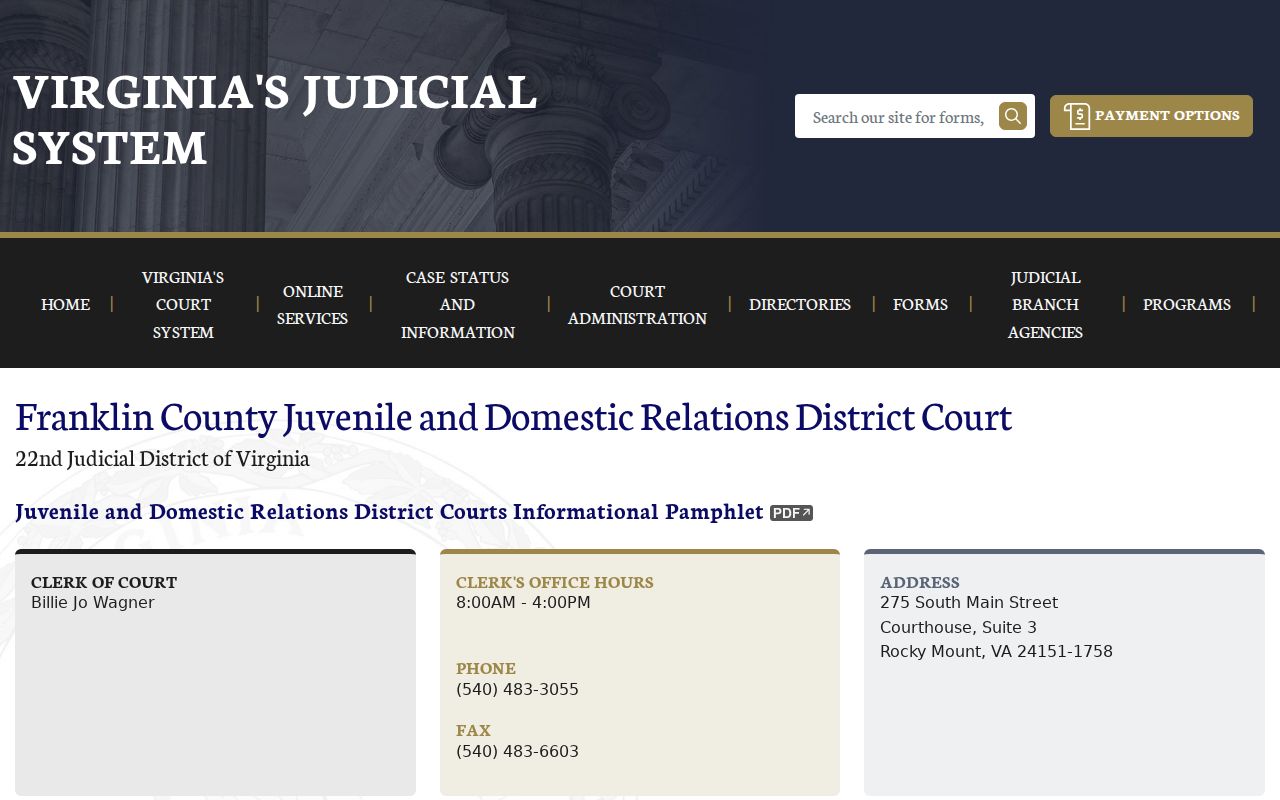
J&DR records and juvenile access follow rules that differ from an adult traffic case.
How Bench and Arrest Warrants Differ
A bench-type warrant concerns a court obligation such as appearing or complying with an order. An arrest warrant begins with a probable-cause finding on a criminal complaint. Both can authorize an arrest, but the reason, case stage, and office that answers questions differ. Franklin's magistrates issue arrest and search warrants; the case clerk identifies what process is in a particular docket.
| Feature | Bench Warrant | Arrest Warrant |
|---|---|---|
| Trigger | Missed appearance, contempt, or order issue | Sworn complaint and probable cause |
| Who Issues It | Judge or authorized court officer | Magistrate, judge, or authorized clerk |
| Underlying Case | Existing case or court obligation | Criminal accusation or proceeding |
| How It Clears | Court appearance or judicial recall/quash | Follow court process, bond, or later ruling |
J&DR Support and Family Process Has Its Own Route
Franklin J&DR handles juvenile, custody, support, family, and some family or household criminal matters. Its clerk is at 275 South Main Street, Suite 3, and can be reached at 540-483-3055. The court publishes Division of Child Support Enforcement sessions on the third Monday and fourth Thursday. That schedule is not a warrant roster or a drop-in recall promise.
The J&DR court page says continuance requests must be in writing and approved by a judge. That rule concerns scheduling, not a published bench-warrant recall form. Juvenile records are restricted by Virginia law, so do not use an adult OCIS search to infer a minor's status.
Use the Franklin J&DR clerk page for the court's own contacts and schedules.
Clearing a Bench Warrant in Franklin County
There is no Franklin public recall form, walk-in surrender schedule, bond table, or amnesty page in the reviewed sources. Confirm the process and ask the clerk whether an attorney motion, a new setting, a judicial appearance, payment, or surrender is required. Do not go to the jail based on an unverified online entry.
- Locate the case in OCIS and identify the Franklin court and case number.
- Call the clerk and ask what process is entered and what the court accepts to address it.
- Consult a Virginia attorney about an appearance, motion to recall, or bond plan.
- After action, obtain the next court date and ask how the clerk records the change.
Caution: Confirm the location, time, identification, and bond instructions with the court or attorney before any appearance; local surrender details are not published.
Bond and Recall Are Not the Same as Dismissal
A magistrate or judge may set bail, but Franklin does not publish a warrant bond schedule, payment method, bond-window hours, or remote payment option. Ask who set the amount, whether it is cash, surety, personal recognizance, or another condition, and where the court directs payment. The sheriff's record-copy charges are separate from bail and fines.
After release, the underlying charge or court obligation can remain open. A recall may remove process but leave a new hearing date or payment duty. Keep the court order or receipt, then confirm the clerk entered the action.
Franklin County Courts That Issue Bench Warrants
Franklin does not have a separate town criminal court in the official court structure reviewed. Adult traffic, misdemeanor, and ordinance cases go to GDC; felony indictments and felony criminal matters go to Circuit; juvenile and family matters go to J&DR. The court that set the obligation controls whether it will recall or change process, not the sheriff's office.
The Virginia OCIS search can help locate the case. The county's court page lists each office, and the Franklin County warrant overview explains the wider clerk, magistrate, and sheriff route.
Franklin's Court Codes Are Locators, Not Process Status
OCIS uses 067G for Franklin General District, 067C for Circuit, and 067J for J&DR. These are useful when a reader selects the court, but they are not warrant-number segments. The exact process label and status must come from the case file or the clerk.
For a suspected missed GDC setting, have the paper, case number, and date ready. Ask the clerk whether a warrant or capias was issued, whether counsel can request a new setting, and how the court will document a recall. Use the GDC's published phone and schedule rather than inferring a walk-in docket from ordinary public session hours.